
Quick Summary
- North Carolina law requires a Wood-Destroying Insect Report (WDIR) for properties being sold or refinanced.
- A qualified inspector examines accessible areas for visible signs of termites and other wood-destroying insects.
- Preparing your home before the inspection helps ensure thorough, accurate results.
- Understanding the five sections of a WDIR helps buyers and sellers navigate the process confidently.
- Winter termite inspections are smart pest control planning, since termite activity continues during cooler months.
The Importance of Termite Inspections in North Carolina
North Carolina's climate is practically a welcome mat for subterranean termites. Warm summers, mild winters, and abundant moisture mean that termite colonies can remain active year-round. Unlike winter pests you can see scurrying across your kitchen floor, termites work silently behind walls, beneath floors, and inside structural beams.
The National Pest Management Association (NPMA) reports that termites cause billions of dollars in structural damage across the United States each year, and that damage is rarely covered by homeowners insurance. For NC homeowners buying or selling property, a professional termite inspection is not just smart; in many cases, it is legally required.
Read our blog describing the signs of a termite infestation in your home.
Understanding the Wood-Destroying Insect Report (WDIR)
In North Carolina, a Wood-Destroying Insect Report is completed, by law, on all residential and commercial properties being sold or refinanced. Only qualified, licensed inspectors may execute this report. The WDIR covers subterranean termites, powder post beetles, old house borers, carpenter ants, and carpenter bees.
The report is organized into five key sections:
- Section 1 covers basic information, including the buyer's name, seller's name, and property location.
- Section 2 documents any areas not inspected due to inaccessibility.
- Section 3 provides specific notes on any visible wood-destroying insects or evidence observed, including location and whether activity appears current or inactive.
- Section 4 is checked only if no visible evidence of wood-destroying insects was observed.
- Section 5 notes whether any areas appear particularly favorable for subterranean termite activity.
Your Pre-Inspection Checklist: Preparing Your Home
A thorough termite inspection depends on the inspector's ability to access key areas of your property. Taking time to prepare before the inspector arrives makes the process faster and more accurate:
- Clear the perimeter. Move firewood, mulch piles, and stored lumber away from the foundation. These materials attract termites and block the inspector's view of exterior foundation walls.
- Provide crawl space access. Make sure the entry point is accessible and clear of stored items. Crawl spaces with less than 12 inches of clearance may not be inspectable.
- Open the garage. Garages and attached structures are part of the inspection. Make sure the inspector can access walls and any areas where wood meets concrete.
- Unlock utility areas. Ensure access to your basement, attic, and utility rooms for examination of moisture, wood damage, and insect activity.
- Trim back vegetation. Dense landscaping against your home's foundation can conceal termite activity. Trim bushes back at least a few inches from exterior walls.
- Address visible moisture issues. Leaky faucets, poor drainage, and standing water near the foundation create conditions favorable for termites.
Read our blog about 10 Ways you are attracting pests into your home.
What Inspectors Look For: The Inspection Day Checklist
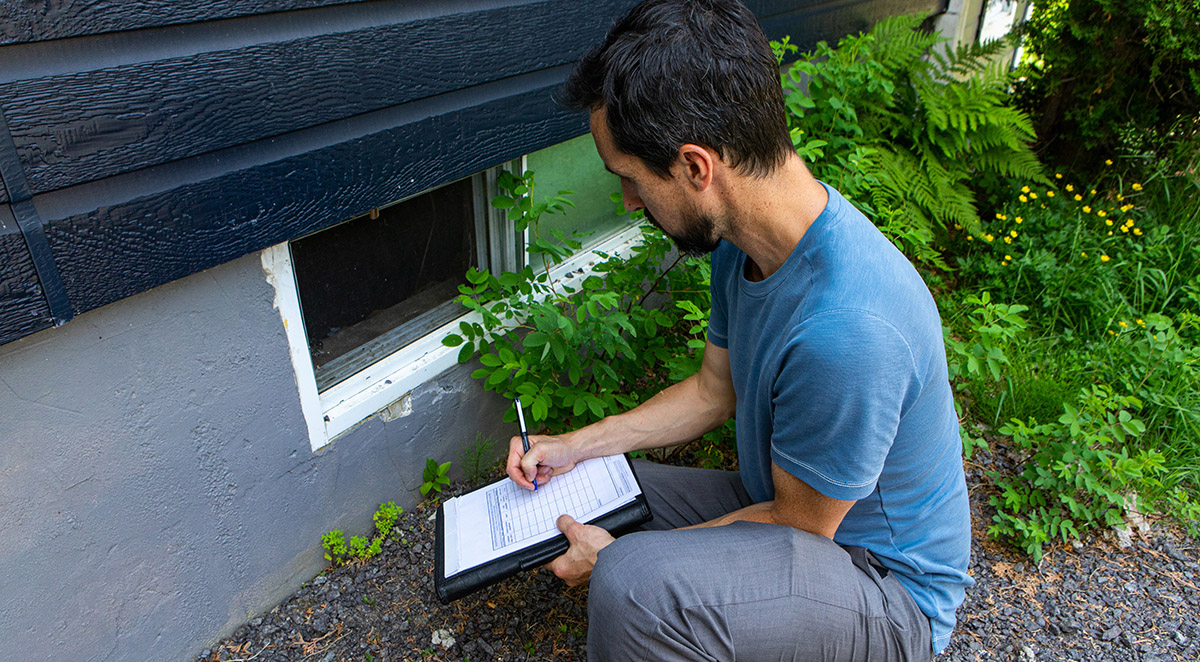
On inspection day, a licensed inspector will examine your home's accessible areas for visible signs of wood-destroying insect activity.
Exterior Inspection
The inspector will walk the outside perimeter of your home, looking for:
- Mud tubes on foundation walls, piers, or crawl space supports
- Damaged or deteriorating wood on siding, trim, decks, and window frames
- Wood-to-soil contact where structural elements touch the ground
- Conditions favorable to infestation such as excessive moisture or wood debris near the foundation
Interior Inspection
Inside the home, the inspector will examine:
- Baseboards, door frames, and window sills for hollow or damaged wood
- Visible signs of insect activity such as discarded wings, frass (insect droppings), or live insects
- Moisture stains or water damage that may indicate conditions attracting winter pests and wood-destroying organisms
- Accessible attic spaces for evidence of infestation
Crawl Space and Basement
These below-grade areas are often where termite activity is most likely. The inspector will check:
- Floor joists, sill plates, and support beams for damage, staining, or mud tubes
- Moisture levels and ventilation
- Evidence of previous treatments or repairs
What Is Not Included
The WDIR covers only visible and accessible areas. Inspectors cannot examine behind walls, under permanent flooring, or in crawl spaces with less than 12 inches of clearance. Detached structures such as sheds and outbuildings are typically not included unless otherwise noted. A WDIR is not a guarantee that termites are absent; it is an honest, professional assessment of what is visible at the time of inspection.
After the Inspection: Understanding Your Results
Once the inspection is complete, the inspector will finalize the WDIR and distribute it to all necessary parties.
No evidence found (Section 4 checked). No visible signs of wood-destroying insects were observed, and the transaction can move forward without additional pest-related requirements.
Evidence of infestation (Section 3 notes). The inspector will note where the infestation was found and whether it appears active or inactive. This opens a conversation between buyer and seller about treatment and cost responsibilities.
Conditions favorable to infestation (Section 5 notes). Even without active infestation, the inspector may note vulnerability factors like excessive moisture, wood-to-soil contact, or poor ventilation that should be addressed as part of ongoing winter pest control.
Why Winter Is the Right Time for a Termite Inspection
Many NC homeowners assume that termite activity stops during winter. While termite swarms are most visible in spring, subterranean termites remain active below the frost line year-round. In North Carolina's mild winters, colonies continue feeding on structural wood even when temperatures drop.
Winter inspections offer key advantages: inspectors tend to have more availability, and you gain time to address findings before the busy spring real estate season. If you plan to list your home in the spring, having a clean WDIR in hand can streamline the selling process and give buyers confidence.
How Rid-A-Bug Can Help
Rid-A-Bug Exterminating has been providing professional termite management and Wood-Destroying Insect Reports to homeowners across North Carolina, South Carolina, and Virginia since 1972. As a family-owned company based in Wilkes County, Rid-A-Bug brings over 50 years of experience to every inspection. All technicians are state-registered and licensed to perform WDIR inspections with expertise, honesty, and integrity.
If the inspection reveals active termite activity, Rid-A-Bug can design and execute a treatment plan using Termidor, a non-repellent product that termites spread throughout their colonies for thorough elimination. Rid-A-Bug offers same-day service availability, warranties for retreatment and damage repair, and a 10% discount for military members and senior citizens. Contact Rid-A-Bug today to schedule your inspection.
Frequently Asked Questions
Is a termite inspection required when buying or selling a home in North Carolina?
Yes. North Carolina law requires a Wood-Destroying Insect Report (WDIR) on all residential and commercial properties being sold or refinanced. This report must be completed by a qualified, licensed inspector.
What is the difference between a termite inspection and a WDIR?
A WDIR is the official report that results from a termite and wood-destroying insect inspection. While many people use the terms interchangeably, the WDIR specifically covers subterranean termites, powder post beetles, old house borers, carpenter ants, and carpenter bees. The inspection is the physical examination; the WDIR is the documented report.
How long does a termite inspection take?
Most residential inspections take between 30 minutes and an hour. Larger properties, homes with extensive crawl spaces, or properties with accessibility challenges may take longer.
Can termites be active during the winter in North Carolina?
Absolutely. While termite swarms are more commonly observed in the spring, subterranean termites remain active year-round below the frost line. North Carolina's mild winter climate means colonies can continue feeding on structural wood during the cooler months, making winter pest control and inspection planning essential.
What happens if termites are found during the inspection?
The inspector will document the findings in the WDIR, and a treatment plan can be designed to address the infestation. In a real estate transaction, the buyer and seller will typically negotiate who is responsible for treatment costs. Contact Rid-A-Bug to discuss inspection and treatment options.
Take the Next Step to Protect Your Home
Whether you are preparing to buy your dream home in Hickory, listing a property in Statesville, or simply want to ensure your home is protected from termites and other winter pests, a professional inspection is the smartest first step. Do not wait for visible damage to appear.
Contact Rid-A-Bug Exterminating today to schedule your termite inspection or WDIR. With over 50 years of trusted, family-owned service across North Carolina, Rid-A-Bug is here to help you protect your home and your investment.