
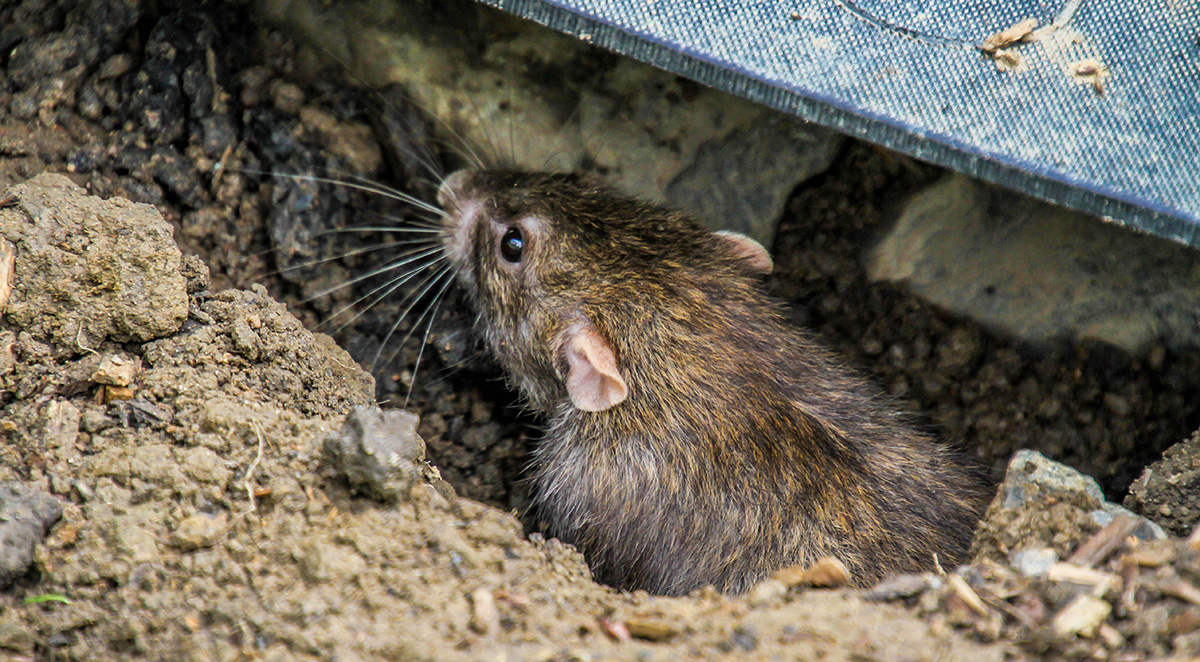
Quick Summary
- Rodents move indoors in fall as temperatures drop and outdoor food becomes scarce, with the highest risk running from October through winter.
- Mice can squeeze through a gap the size of a dime, so even small openings matter.
- The most effective prevention is exclusion: sealing entry points around your foundation, utility lines, vents, doors, and roofline.
- Rodents are a health and safety concern. They can chew wires, contaminate food, and carry disease.
- When prevention is not enough, Rid-A-Bug offers Pest and Insect Management, Wildlife Management with a Wildlife Damage Control Agent on staff, and Crawl Space Encapsulation to keep pests out for the long term.
Why Rodents Head Indoors in Fall
Mice and rats are warm-blooded animals that cannot regulate their body temperature well once the weather turns cold. As fields are harvested and natural food sources disappear in autumn, rodent populations that thrived outdoors all summer start looking for somewhere new to live. Your heated, food-filled home becomes an irresistible target.
This seasonal push indoors typically begins in early fall and intensifies as temperatures drop, with home invasions peaking from October through the winter months. The first real cold snap often triggers a surge of activity. Acting before that happens is the single most important step you can take.
There is also a reproduction factor at play. Mice and rats can breed year-round when conditions are good, so a few rodents that slip in this fall can become a serious infestation by late winter. Stopping them at the door is far easier than removing an established population later.
How Small a Gap Do Rodents Need?
Most homeowners are surprised by just how little space a rodent needs to get inside. According to the Centers for Disease Control and Prevention, a mouse can fit through a hole about the width of a pencil, roughly a quarter inch, or the size of a dime. Rats need only a slightly larger gap, about the size of a quarter.
Rodents are also skilled climbers. They can scale siding, brick, and gutters to reach roof vents, soffits, and attic gaps well above ground level. That means your inspection cannot stop at the foundation. You need to look high and low.
Common Entry Points to Check
Before you start sealing, walk the full perimeter of your home and inspect the roofline. Rodents tend to exploit the same predictable weak spots:
- Cracks in the foundation, even hairline ones near the base of walls
- Gaps where gas, water, electrical, and HVAC lines enter the home
- Unsealed or damaged dryer vents, attic vents, and crawl space vents
- Spaces beneath exterior and garage doors with worn or missing weatherstripping
- Deteriorated caulking and damaged screens around windows
- Loose shingles, damaged soffits, and gaps where roof sections meet
- Uncapped chimneys
If you can slide a pencil into a gap, treat it as a potential entry point and plan to seal it.
A Fall Sealing Checklist
Once you know where to look, sealing those openings is straightforward work for most homeowners. The CDC recommends a few proven materials and methods. Work through these steps before winter arrives:
- Fill small holes with steel wool, then hold it in place with caulk or spray foam. Rodents are unlikely to chew through tightly packed steel wool.
- Close larger openings with lath screen, metal sheeting, hardware cloth, or cement, cutting the material to fit neatly around pipes.
- Cover dryer vents, attic vents, and crawl space vents with quarter-inch galvanized hardware cloth or rodent-proof covers.
- Install door sweeps and fresh weatherstripping on exterior doors, garage doors, and basement entries. If you can see daylight under a door, a mouse can get through.
- Re-caulk gaps around window frames and repair or replace torn screens.
- Cap your chimney and check that all vent covers are intact and secure.
Do not stop at the structure itself. Trim tree branches back from the roof, move woodpiles and clutter away from the foundation, keep landscaping a few feet from exterior walls, and store food and pet food in sealed glass or hard plastic containers. Removing the food, water, and shelter that attract rodents makes your home far less inviting in the first place.
Signs Rodents Have Already Moved In
Sometimes rodents beat you to the seal-up. Because mice are nocturnal, you may not see them, but they leave plenty of clues. Watch for these warning signs:
- Faint scratching or scurrying sounds in walls, ceilings, or the attic at night
- Small, rice-shaped droppings in pantries, cabinets, or along baseboards
- Gnaw marks on food packaging, wood, or wiring
- Shredded paper, fabric, or insulation used for nesting
- A musty, ammonia-like odor that builds over time
If you notice any of these, prevention alone will not solve the problem. At that point, the rodents already inside need to be removed before you seal the openings behind them.
If you are experiencing any other pest issues, be sure to read our blog on eight summer pests and how to avoid them.
How Rid-A-Bug Helps
Rid-A-Bug Exterminating has been serving North Carolina since 1972 as a local, family-owned and operated business, so we know exactly how our region's rodents behave when the weather turns. When prevention is not enough, we bring several services to bear:
- Pest and Insect Management, which addresses mice as part of a tailored plan that may include a bait system, ongoing maintenance, or LEED certified products.
- Wildlife Management, handled by our trained team and backed by a North Carolina Wildlife Damage Control Agent on staff, for the humane removal of rodents, mice, and rats, with emergency wildlife response available when you need a fast answer.
- Crawl Space Encapsulation, which seals and closes crawlspaces to create a dry environment that is not conducive to pests, offering a long-term solution for keeping them out.
Our approach is rooted in Integrated Pest Management, which uses knowledge of a pest's life cycle and environment to control it effectively while limiting unnecessary chemical use. Here is what families across our service area count on:
- Over 50 years of experience
- Fully licensed and insured service, with all technicians state-registered
- Same-day service available
- Warranties available
- A 10% discount for military members and senior citizens
- Quality, personalized service from a team rooted in your community
We proudly serve Yadkin County and the surrounding region. To schedule an inspection or learn more, reach out through our contact page.
For more, read our blog about 10 Ways you are attracting pests into your home.
Frequently Asked Questions
When do rodents start coming inside in Yadkin County?
Rodents begin seeking shelter as soon as the weather cools in early fall, with activity intensifying from October through winter. Sealing your home before the first hard cold snap gives you the best protection.
What is the most effective way to keep mice out?
Exclusion is the most effective long-term method. That means sealing entry points with materials rodents cannot chew through, such as steel wool and caulk for small gaps and hardware cloth or metal for larger ones, while also removing the food and clutter that attract them.
Can I handle rodent prevention myself?
Many homeowners can complete a solid fall seal-up on their own using the checklist above. If you already hear scratching, find droppings, or cannot locate or reach the entry points, that is the time to call a professional.
Are rodents really a health risk?
Yes. Rodents can spread disease, contaminate food, and trigger allergy and asthma symptoms, and their constant gnawing on wiring poses a fire hazard. Keeping them out protects both your family and your home.
Does Rid-A-Bug serve my area?
We serve Yadkin County, including Yadkinville, Hamptonville, Boonville, and neighboring communities, along with a broad region across North Carolina, South Carolina, and Virginia.
Seal Up Before the Cold Sets In
Fall is your window of opportunity. A careful inspection and a few hours of sealing work now can spare you a winter of unwelcome houseguests and the costly damage they bring. Start with the entry points, remove the attractants, and watch for the early signs of activity.
If you would rather have an expert handle it, or if rodents have already found their way in, the team at Rid-A-Bug is ready to help. Reach out through our contact page and let more than five decades of experience protect your home this season.