
Quick Summary
- LEED (Leadership in Energy and Environmental Design) is a green building rating system developed by the U.S. Green Building Council, and it certifies buildings rather than individual products.
- Pest management appears in LEED through an Integrated Pest Management credit tied to indoor environmental quality and green cleaning.
- Integrated Pest Management (IPM) prioritizes inspection, exclusion, sanitation, and monitoring, and treats pesticides as a last resort rather than a first response.
- Documentation and occupant notification are just as important to LEED compliance as the products used.
- Rid-A-Bug Exterminating offers LEED certified treatments as part of a pest management approach built on IPM principles.
- Even if your property is not pursuing certification, the same methods reduce chemical exposure and deliver longer-lasting results.
What LEED Certification Actually Means
LEED is the most widely used green building rating system in the world, and it was developed by the U.S. Green Building Council. It evaluates how a building is designed, constructed, operated, and maintained across categories including energy performance, water use, materials, site management, and indoor environmental quality. Projects earn points in those categories, and the total determines whether a building certifies at the Certified, Silver, Gold, or Platinum level.
One detail worth clearing up early: LEED certifies buildings and spaces, not bottles of product. When a pest control company references LEED certified treatments, what that means in practice is a service approach built around the products, methods, and documentation that support a building's pursuit of LEED credits. The distinction matters because it shifts the focus from what is in the sprayer to how the entire program is designed and recorded.
Why Pest Control Shows Up in a Green Building Rating System
Indoor environmental quality is a major LEED category, and pesticide exposure is one of the contaminants the rating system is designed to limit. A building can have excellent insulation, efficient lighting, and low-emitting finishes, and still expose occupants to unnecessary chemical residue through a poorly managed pest program.
Under the LEED Operations and Maintenance rating system, integrated pest management appears as a credit within indoor environmental quality, alongside the green cleaning requirements. The intent is straightforward: reduce occupant exposure to substances that harm the indoor environment while still keeping the building free of pests. Both goals have to be met. A building that simply stops treating for pests has not solved the problem, it has traded a chemical issue for a sanitation and structural one.
The Integrated Pest Management Credit
To pursue the credit, a project generally needs a written IPM plan that governs the building and the grounds inside the project boundary. That plan has to specify inspection and monitoring practices, define when action is warranted, prioritize nonchemical controls, and limit chemical applications to least-toxic options used only after other approaches have been exhausted. It also has to address what happens in an emergency, and it has to include a communication strategy for building occupants.
How Integrated Pest Management Supports LEED Requirements
IPM is an approach to controlling pest populations using knowledge of their life cycles and their interaction with the environment. It sets out to manage pests while reducing risk to people, property, and the surrounding ecosystem. The methods inside the IPM toolbox line up almost perfectly with what LEED asks for:
- Biological control uses natural predators and parasites to suppress pest populations. Ladybugs managing aphids and parasitic wasps managing caterpillars are common examples.
- Cultural control makes an environment less hospitable to pests by eliminating food and water sources, clearing clutter, and maintaining good hygiene.
- Mechanical control physically removes pests or blocks them out. Caulking cracks and crevices, screening windows and doors, and installing door sweeps all fall into this category.
- Chemical control still has a place, but in an eco-friendly IPM program only low-risk, least-toxic products are used, applied sparingly and only when they are genuinely needed.
- Education and awareness round out the system. Teaching occupants about sanitation and proper food storage reduces the conditions that draw pests in the first place.
The order matters. LEED rewards programs that treat chemical application as the option of last resort rather than the default service visit. For more, read our blog about 10 Ways you are attracting pests into your home.
What a LEED Aligned Pest Program Looks Like in Practice
An IPM-based program feels different from a traditional spray route. Visits are diagnostic before they are corrective, and the technician spends as much time inspecting and reporting as treating. A well-run program typically follows this sequence:
- Site assessment. A thorough inspection of the structure, the grounds, and the conditions that invite pests, including moisture problems, entry points, and harborage areas.
- Monitoring. Placement of monitoring devices and a schedule for checking them, so decisions are driven by evidence instead of assumption.
- Action thresholds. Clear agreement on what level of pest activity triggers a response, preventing both overtreatment and neglect.
- Nonchemical intervention first. Exclusion work, sanitation recommendations, structural repairs, and trapping before any product is considered.
- Targeted treatment when necessary. Least-toxic products applied to specific locations rather than broadcast across a space.
- Documentation and review. Service reports, sighting logs, and periodic evaluation of whether the program is working.
Documentation and Notification: The Part Most Buildings Miss
Product selection gets the attention, but the paperwork is where LEED projects most often stumble. Recordkeeping is required to demonstrate ongoing compliance with the IPM plan, and every pesticide application, including least-toxic options, should be logged.
Communication carries similar weight. LEED-aligned IPM policies call for advance notice to occupants before applications of anything other than a least-toxic product, and for prompt notice after an emergency application. Notifications typically include the product name, the EPA registration number, the treatment location, and the application date, which allows high-risk occupants such as children, pregnant women, and older adults to plan around a treatment.
Working with a provider that keeps clean, consistent service records is not a bureaucratic nicety on a LEED project. It is the evidence the certification process runs on.
Eco-Friendly Pest Control Benefits Beyond the Plaque
Most homeowners in Wilkes County are not chasing a LEED plaque, and that is fine. The methods still deliver:
- A healthier environment. Reducing dangerous chemicals protects your family and pets, and keeps compounds out of groundwater and the landscape around your home.
- Protection for pollinators. Natural pest solutions avoid harming the flora and fauna around your property. Pesticide use is one contributing factor in honeybee decline, and a healthy yard needs a healthy honeybee population.
- Less pest resistance. Pests evolve resistance to pesticides applied repeatedly over generations. Because IPM uses multiple methods rather than one chemical, it sidesteps that problem.
- Better long-term value. IPM is not the cheapest option upfront, but the long-term nature of the approach can change how much pest control your property needs over time.
There are tradeoffs worth naming. IPM starts slower than blanket chemical treatment. You can saturate a property with pesticides and see faster results, but the cost of that speed shows up in your indoor air, your soil, and your pollinators.
Read our blog about pest control season by season.
Rid-A-Bug's Approach to Eco-Friendly Pest Management
Rid-A-Bug Exterminating has been solving pest and wildlife problems since 1972 and now has a staff of more than 45 pest management professionals serving North Carolina, South Carolina, and Virginia. LEED certified treatments are available, with an emphasis on IPM and non-chemical solutions that address the underlying cause of a pest problem.
Services that support a low-impact approach include:
- Pest and insect management using bait systems, ongoing maintenance, and LEED certified products
- Termite management, including preventative treatment
- Mosquito management that targets breeding sources in the yard
- Bed bug management and wildlife management, including humane removal and relocation
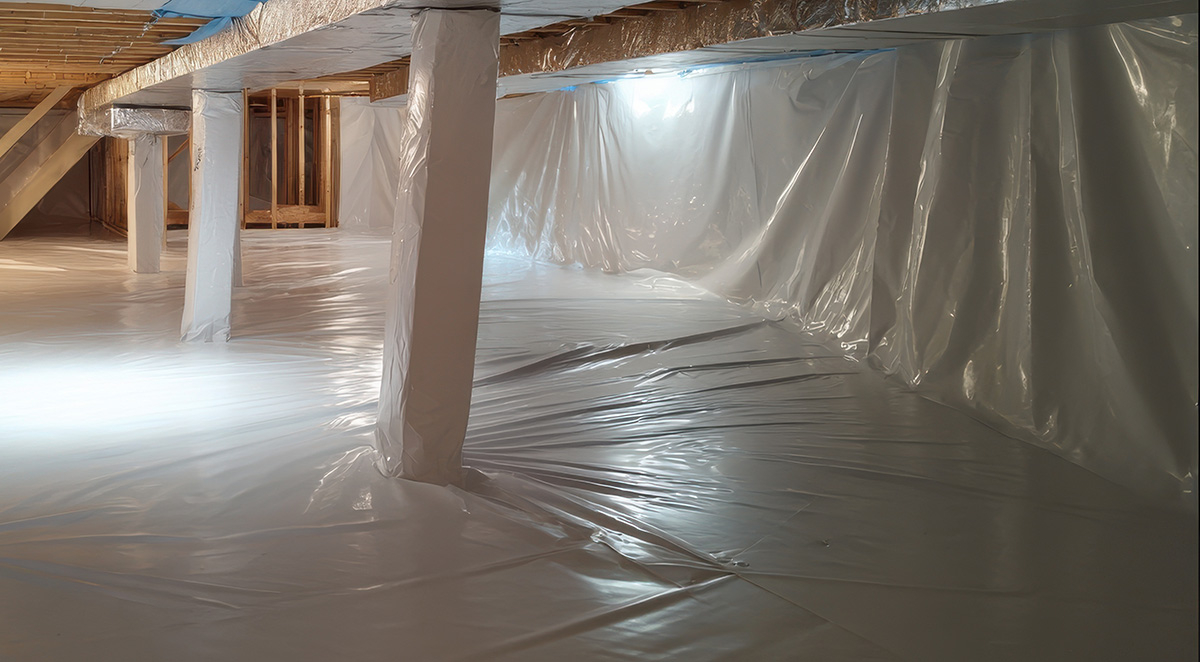
- Crawl space encapsulation, which reduces moisture and creates conditions that are not conducive to pests
- TAP insulation installation, developed with environmentally friendly techniques, for attics and crawl spaces
Every technician is state-registered for pest management and wood destroying insects, and the company holds certifications from the North Carolina Department of Agriculture, the North Carolina Pest Management Association, the National Pest Management Association, and the North Carolina Wildlife Commission.
Frequently Asked Questions
Can a pest control product be LEED certified?
Not in the strict sense. LEED certifies buildings and spaces, not individual products. What matters is whether the products used qualify as least-toxic under the applicable criteria and whether the overall program meets the integrated pest management requirements.
Does my home need to be LEED certified to benefit from eco-friendly pest control?
No. LEED certification applies to buildings pursuing the rating system, but the underlying IPM methods work the same way in a single-family home. Exclusion, sanitation, monitoring, and targeted low-impact treatment reduce chemical exposure regardless of whether anyone is filing paperwork.
Is eco-friendly pest control as effective as conventional treatment?
It is effective, but it works on a different timeline. Chemical-heavy treatment produces faster visible results. IPM addresses the conditions that allow pests to thrive, which takes longer to show but tends to hold longer and resists the pesticide tolerance that pests develop over time.
What documentation should I keep for a LEED pest management credit?
Keep the written IPM plan, service reports, pest sighting logs, records of every pesticide application including least-toxic products, and copies of any occupant notifications issued during the performance period.
How much does eco-friendly pest control cost?
Pricing depends on the property, the pest pressure, and the scope of the program. Reach out through our contact page and we will put together an estimate for your situation.
The Bottom Line
LEED certification turned pest control into something more thoughtful than a monthly spray. It asks buildings to inspect before they treat, reach for the least harmful option available, tell occupants what is happening, and write it all down. Those are good practices whether you manage a commercial property in Winston-Salem or a farmhouse outside North Wilkesboro.
If you want a pest management program that protects your property without compromising the environment inside or outside of it, we are ready to help. Call 1-800-682-5901 or reach out through our contact page to schedule an inspection. Same-day service is available, along with weekend and evening hours across our service area.