
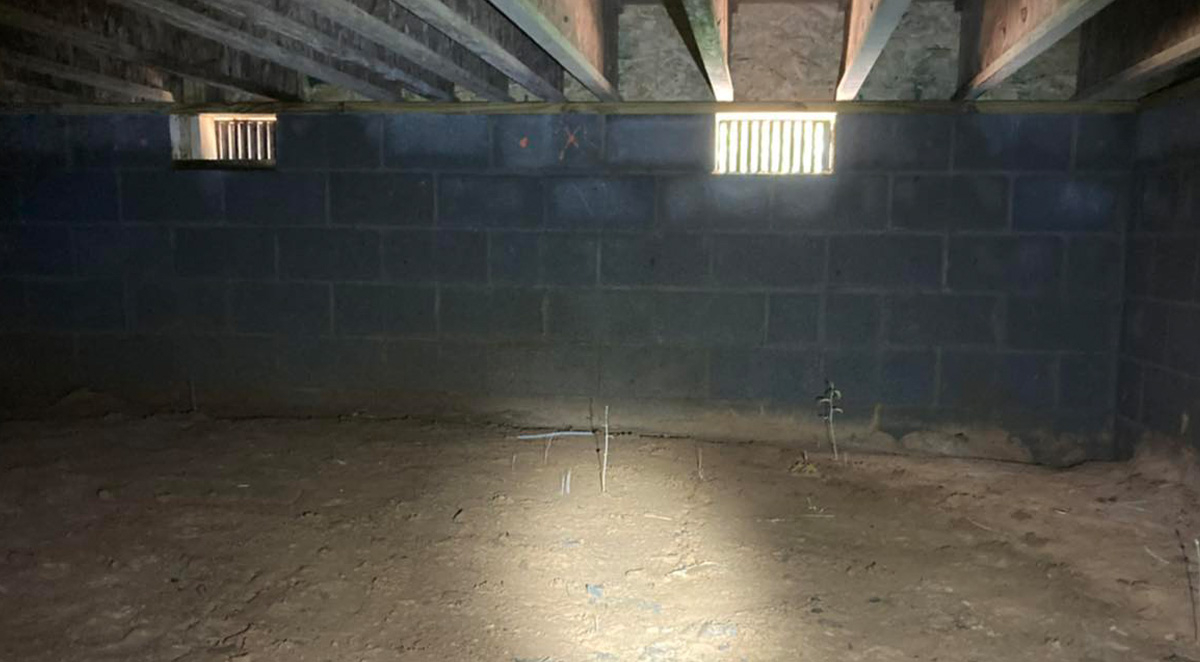
This guide covers what crawl space encapsulation actually involves, what it does and doesn't do well, who it makes the most sense for, and what to expect from the process.
Quick Summary
- Crawl space encapsulation seals the floor and walls of a crawl space with a heavy-duty vapor barrier, dramatically reducing moisture infiltration from the soil
- Primary benefits include moisture control, termite and pest prevention, improved indoor air quality, and energy savings up to 18% on heating and cooling
- The primary drawback is upfront cost, which varies based on crawl space size and condition
- Encapsulation is especially recommended for NC foothills homes with older construction, pier-and-beam or block foundations, or any history of moisture, mold, or pest activity
- Rid-A-Bug provides crawl space encapsulation as part of a comprehensive pest and moisture management approach
- Contact Rid-A-Bug to schedule an inspection and crawl space assessment
What Is Crawl Space Encapsulation?
Crawl space encapsulation is the process of creating a sealed, controlled environment in your home's crawl space by installing a heavy-duty vapor barrier across the ground and walls. A professional installation typically includes:
- A thick polyethylene vapor barrier laid across the crawl space floor and extended up the foundation walls and piers
- Sealed seams and edges to prevent moisture from bypassing the barrier at joints
- Insulation on the walls and sometimes rim joists to reduce thermal transfer
- A drainage system if water intrusion is present (not just moisture vapor)
- A dehumidifier in some cases to maintain target humidity levels within the encapsulated space
The goal is to convert the crawl space from a vented, open environment in direct contact with moist soil into a sealed, dry environment that can be managed as part of the conditioned space of the home.
This is different from simply placing a basic plastic sheet on the crawl space floor, which is a minimal measure that addresses only surface moisture and doesn't provide the coverage, durability, or sealing that professional encapsulation does.
Why Crawl Spaces Need Special Attention in the NC Foothills
Not every region has the same relationship with crawl spaces. In drier climates, vented crawl spaces with minimal vapor barriers can perform adequately. In the NC foothills, the combination of several regional factors makes this approach consistently inadequate:
- Summer humidity regularly exceeds 70% across the Piedmont and foothills, creating significant moisture differentials between the outdoor air, the soil, and the crawl space environment
- The region's clay-heavy soils retain moisture for extended periods after rainfall, keeping the ground beneath crawl spaces consistently damp
- Wooded lots and shaded north-facing foundations limit evaporation and keep soil moisture elevated
- Older home construction throughout Wilkes and Yadkin County predates modern vapor barrier requirements, leaving many crawl spaces with inadequate or deteriorating original protection
In these conditions, an unencapsulated crawl space isn't a neutral situation — it's an active source of moisture infiltration, structural risk, and pest habitat.
The Pros of Crawl Space Encapsulation
Pro #1: Moisture Control
The primary benefit of encapsulation is eliminating the ground moisture source in the crawl space. A properly installed vapor barrier prevents soil moisture from evaporating into the crawl space environment, dramatically reducing relative humidity levels in that space. This addresses the root cause of most crawl space problems: mold, wood rot, and the pest activity associated with moisture, rather than simply managing the symptoms after they appear.
For NC foothills homes, where soil moisture is a year-round reality, this is the most consequential benefit of encapsulation.
Pro #2: Termite and Pest Prevention
Subterranean termites require consistent soil moisture to maintain colony health. Moist crawl spaces are among the most termite-hospitable environments a home can offer. By reducing soil moisture contact with the crawl space environment, encapsulation removes one of the primary conditions that supports active termite colonies near your home's structure.
Similarly, carpenter ants, moisture ants, wood-boring beetles, and rodents are all attracted to moist, partially decayed wood in crawl spaces. A dry, encapsulated crawl space is significantly less inviting to these pests. For homeowners dealing with recurrent pest problems in the crawl space, addressing moisture is often the most effective long-term intervention.
Pro #3: Improved Indoor Air Quality
Research consistently indicates that up to 40% of the air in a typical home originates in the crawl space, carried upward through the structure by the stack effect. In an unencapsulated crawl space, that air carries mold spores, musty odors, dust mite allergens, and elevated humidity into the living spaces above.
Encapsulation substantially reduces this pathway, resulting in measurably better indoor air quality. For households with members who have allergies, asthma, or other respiratory sensitivities, this is one of the most tangible quality-of-life benefits of the service.
Pro #4: Increased Energy Efficiency
A moist crawl space forces your HVAC system to work harder to remove excess humidity from the home's air, particularly during the hot, humid NC foothills summers. Encapsulation reduces this load significantly. Rid-A-Bug's crawl space encapsulation service can reduce heating and cooling costs by up to 18% per year by creating a more thermally stable, less moisture-laden crawl space environment. Over the life of the encapsulation system, these savings contribute meaningfully to offsetting the upfront investment.
Pro #5: Increased Usable Storage Space
An encapsulated crawl space is a clean, dry environment that can be used for storage without concern about moisture damage, mold contamination, or pest exposure. Items stored in an encapsulated crawl space are protected in a way that an open crawl space simply cannot offer.
Pro #6: Increased Home Value
A professionally encapsulated crawl space is a documented asset for future home sales. Buyers and their inspectors know what a proper encapsulation looks like, and documentation of the installation and any maintenance is a selling point. In a region where crawl space condition is a frequent issue in home inspections, having this addressed proactively distinguishes a property.
The Cons of Crawl Space Encapsulation
Con #1: Upfront Investment
Crawl space encapsulation requires a professional installation and is not an inexpensive service. Costs vary based on the size of the crawl space, the current condition (including whether existing moisture damage or drainage issues need to be addressed before installation), and the specific components included. For an accurate estimate based on your home's specific situation, contact Rid-A-Bug for an inspection and assessment.
That said, the cost of encapsulation should be evaluated against the cost of the problems it prevents. Structural repairs to termite or moisture-damaged floor joists and sill plates, mold remediation, and the cumulative energy costs of an uncontrolled moisture environment consistently exceed encapsulation costs in homes where these problems have been allowed to develop.
Con #2: Requires Proper Installation
Crawl space encapsulation is only as effective as its installation. Improperly sealed seams, insufficient barrier thickness, or failure to address drainage issues before sealing can undermine the effectiveness of the system. This is why professional installation by a licensed provider matters: a vapor barrier that allows moisture bypass at the seams or walls provides significantly reduced benefit.
Con #3: May Require Supplemental Dehumidification
In some NC foothills homes, particularly those with significant moisture infiltration history or very high ambient humidity, a vapor barrier alone may not be sufficient to achieve target humidity levels within the encapsulated space. A dehumidifier sized for the crawl space volume may be recommended as a supplemental measure. This adds to both the installation cost and the ongoing maintenance requirement (filters and drainage management for the dehumidifier unit).
Encapsulation vs. Venting: Understanding the Difference
Many older NC foothills homes have vented crawl spaces: a design approach based on the idea that allowing outdoor air to flow through would dry out the crawl space environment. In practice, in the humid NC foothills climate, vented crawl spaces often perform worse than sealed ones because the outdoor air being introduced is itself humid during much of the year.
Modern building science research supports sealed, conditioned crawl spaces over vented ones in high-humidity climates like western North Carolina. Encapsulation represents the current best-practice approach for crawl space moisture management in this region, and it's what Rid-A-Bug recommends and installs for homeowners dealing with persistent moisture issues.
What the Process Looks Like with Rid-A-Bug
The encapsulation process begins with a thorough inspection of the existing crawl space condition. Our technicians assess moisture levels using calibrated moisture meters, document any existing structural damage, mold activity, or pest evidence, and identify any drainage or standing water issues that need to be addressed before installation.
Once the assessment is complete, we provide a clear recommendation on the appropriate scope of work. Installation typically involves removing any old, deteriorated vapor barriers, addressing any necessary structural or drainage work, and installing the new barrier and associated components. The result is a documented, sealed crawl space environment with significantly reduced moisture infiltration.
For homeowners already enrolled in a pest management program with Rid-A-Bug, crawl space encapsulation integrates directly with ongoing termite monitoring and inspection, providing a comprehensive approach to both moisture and pest management in the most vulnerable area of the home.
Frequently Asked Questions
How long does crawl space encapsulation last?
A professionally installed crawl space encapsulation system, using heavy-duty polyethylene vapor barriers, typically lasts 20 years or more with appropriate maintenance. Annual inspections to check for tears, seam integrity, and drainage function help ensure the system performs across its lifespan.
Does crawl space encapsulation prevent all termite activity?
Encapsulation significantly reduces the moisture conditions that support subterranean termite colonies, but it is not a substitute for termite treatment or monitoring. It should be considered one component of a comprehensive termite prevention program rather than a standalone termite solution.
Is crawl space encapsulation worth it if I already have termites?
Yes, but in the correct order. If active termite activity is present, treatment should occur before encapsulation. Encapsulating over an active infestation can seal termites inside structural wood and make inspection and monitoring more difficult. Rid-A-Bug will always inspect for active pest activity before recommending encapsulation.
Can I install crawl space encapsulation myself?
Basic plastic sheeting can be installed as a DIY project, but professional-grade encapsulation requires properly sealed seams, appropriate barrier thickness and material, and attention to drainage and ventilation that most homeowners are not equipped to execute correctly. Professional installation provides a significantly more durable and effective result.
Will encapsulation eliminate the musty smell coming from my crawl space?
In most cases, yes. The musty odor associated with crawl spaces is primarily caused by mold growth in the moist environment. Encapsulation reduces the moisture conditions that support mold growth. In cases where active mold growth is present, remediation may be recommended before encapsulation to address the existing colony.
Does Rid-A-Bug service crawl spaces in Wilkes and Yadkin County?
Yes. Rid-A-Bug provides crawl space encapsulation and inspection services throughout Wilkes County, Yadkin County, and the surrounding foothills and Piedmont region of NC, as well as our service areas in SC and VA.
How do I know if my crawl space needs encapsulation?
Common indicators include a persistent musty odor in the home, visible mold in the crawl space, elevated wood moisture readings, evidence of pest activity, higher-than-expected summer cooling costs, and visible standing water or soil saturation after rain. A professional inspection provides a definitive assessment.
A Dry Crawl Space Is the Foundation of a Healthy Home
In the NC foothills, crawl space encapsulation is not a luxury upgrade: it's a practical response to the regional climate, soil conditions, and construction types that make unmanaged crawl space moisture a consistent and consequential risk. The upfront investment is real, and it should be evaluated honestly. But the compounding problems that develop in unaddressed crawl spaces – moisture damage, mold, termite activity, elevated energy costs, and poor indoor air quality – are consistently more expensive and disruptive to address after the fact.
If you haven't had your crawl space inspected recently, or if you're seeing signs of moisture problems in your home, contact Rid-A-Bug today or call 1-800-682-5901 to schedule an assessment. We serve Wilkes County, Yadkin County, Ashe County, Alleghany County, and the surrounding NC foothills region.